











No timelines for governors, president to act on bills, says Supreme Court
The bench also held that the idea of courts declaring ‘deemed assent’ was in contrast to the spirit of the Constitution.
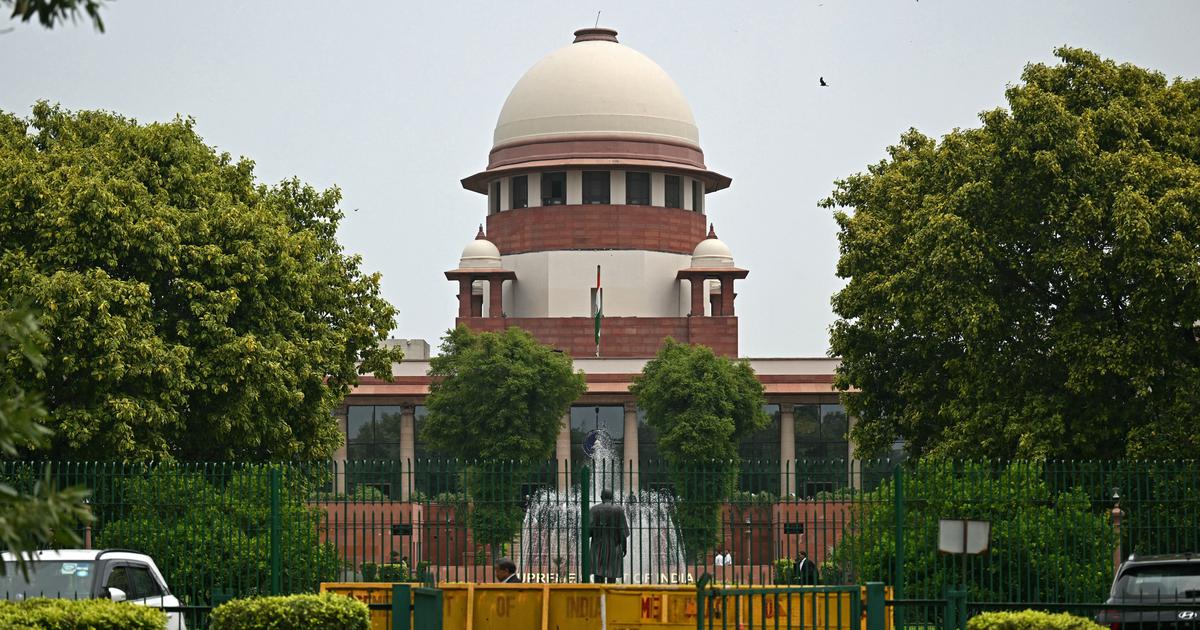
The Supreme Court on Thursday held that courts cannot impose timelines on the president or governors for granting assent to bills, Live Law reported.
The ruling came while answering a reference made by President Droupadi Murmu in May regarding the Supreme Court’s April 8 judgement that had prescribed timelines.
The court had held that governors must decide on bills within a reasonable time and cannot delay indefinitely under Article 200. Similarly, the president must act within three months under Article 201 and any delay beyond that must be explained and communicated to the state government.
Article 200 and Article 201 outline the process of assent to bills by governors and the president.
Murmu had asked for the court’s opinion on whether the actions of governors and the president could be tried in court, and whether such timelines could be imposed on them in the absence of any such provision in the law.
Article 143(1) allows the president to ask for the opinion and the advice of the court on matters of legal and public importance.
A bench of Chief Justice BR Gavai, and Justices Surya Kant, Vikram Nath, PS Narasimha and AS Chandurkar had heard the matter and reserved its judgement in September.
On Thursday, the bench held that the idea of courts declaring “deemed assent”, allowing pending bills to be considered approved if timelines for governors to act were breached, was in contrast to the spirit of the Constitution, Live Law reported.
It added that the process also violated the doctrine of separation of powers.
Declaring “deemed assent” would amount to the judiciary taking over functions reserved for the governor, the bench observed.
However, it also held that if there is a prolonged or unexplained delay by a governor that “frustrates the legislative process”, the court can exercise limited judicial review to direct the governor to decide within a time-bound manner, Live Law reported.
The April ruling came on a petition filed by the Tamil Nadu government after Governor RN Ravi did not act on several bills for more than three years before rejecting them and sending some to the president.
The court had held that governors must decide on bills within a reasonable time and cannot delay indefinitely under Article 200. Similarly, the president must act within three months under Article 201 and any delay beyond that must be explained and communicated to the state government.
The judgement had also introduced the concept of “deemed assent” in cases of prolonged inaction.
On September 11, Solicitor General Tushar Mehta, appearing for the Union government, contested the submissions of Opposition-ruled states – Tamil Nadu, West Bengal, Kerala, Karnataka, Telangana, Punjab and Himachal Pradesh – that opposed the presidential reference.
Bharatiya Janata Party-ruled states such as Maharashtra, Madhya Pradesh, Uttar Pradesh, Odisha, Goa and Chhattisgarh had defended the functional autonomy of governors and the president in assenting to bills passed by state legislatures.
Earlier, advocate KK Venugopal, representing Kerala, and Kapil Sibal, appearing for Tamil Nadu, had argued that the issues raised by the president were already settled by a series of Supreme Court rulings, including the April 8 verdict.
Also read:
Pocket vetoed: Governors are sitting on bills – and undermining federalism
How effective is Modi’s strategy of using hostile governors in Opposition states?
